
Roof aging is not measured by appearance alone. The roof’s material, installation quality, ventilation, drainage, weather exposure, and maintenance history all affect how quickly it develops problems.
For residents in Hornell, NY, seasonal temperature changes, snow, ice, wind, rain, and repeated freeze-thaw cycles can make small weaknesses more noticeable over time. Learning the signs of aging helps homeowners distinguish normal weathering from conditions that may require prompt attention.
What does an aging roof usually look like?
An aging roof often shows several smaller changes rather than one dramatic failure. Common signs include surface wear, discoloration, loose materials, exposed fasteners, and water stains beneath the roof.
The most useful inspection compares the roof’s current condition with how it looked a few years earlier. A roof that has gradually developed more curled edges, missing granules, or moss growth may be nearing the point where routine repairs are no longer enough.
Age alone does not determine whether a roof is failing. A well-installed roof with good ventilation and regular maintenance may remain serviceable longer than a newer roof that has suffered storm damage or trapped moisture.
How can asphalt shingle aging be identified?
Asphalt shingles are common on many homes and typically show aging through changes in their texture and shape.
Look for:
- Granules collecting in gutters or at the bottom of downspouts
- Bald or shiny patches where the protective surface has worn away
- Shingles that curl upward, cup inward, or appear wavy
- Cracked, split, or missing shingles
- Dark streaks caused by algae growth
- Exposed nail heads or deteriorated sealant
- Areas that look noticeably different from the rest of the roof
A small amount of granule loss can occur after installation, but widespread loss across several roof sections is more concerning. Curling and brittleness usually indicate that the asphalt has lost flexibility. During cold weather, aged shingles can become especially fragile and may crack when disturbed.
Dark streaking does not always mean the roof is structurally damaged. Algae primarily affects appearance, although persistent moisture can contribute to faster surface deterioration. Moss deserves closer attention because its roots can lift shingle edges and retain water against the roof covering.
What are the signs of aging on metal roofing?
Metal roofs can last for many decades, but they still develop recognizable age-related problems. The visible surface may remain intact even when fasteners, seams, coatings, or flashing are deteriorating.
Check for:
- Rust around fasteners, seams, valleys, or roof edges
- Peeling, chalking, or fading protective coatings
- Loose panels or raised seams
- Failed washers beneath exposed fasteners
- Open gaps around chimneys, vents, and other penetrations
- Dents that hold water instead of allowing it to drain
- Corrosion along areas where different metals meet
A few shallow dents are not always an emergency, especially when the panels remain sealed and drainage is unaffected. More serious concerns include standing water, separated seams, corrosion that has penetrated the panel, and repeated leaks around fasteners.
Snow and ice can place additional strain on metal roof components. Sliding snow may bend edge details or damage gutters, while freeze-thaw movement can enlarge small openings around penetrations.
How does an aging wood-shake or wood-shingle roof appear?
Wood roofing tends to show aging through moisture damage, splitting, and loss of surface uniformity. Healthy wood shingles or shakes usually have consistent spacing and a firm, relatively even surface.
Warning signs include:
- Splits that run through the length of the material
- Soft, spongy, or crumbly sections
- Missing pieces or large gaps
- Excessive moss, mold, or fungal growth
- Darkened areas that remain damp
- Warped or raised shingles
- Deterioration near valleys, eaves, and roof edges
Wood roofs require good air movement and the ability to dry after rain or snow. Leaves, moss, and debris can trap moisture and accelerate decay. Areas shaded by nearby trees may age faster than sections exposed to sunlight and wind.
Because wood deterioration can extend beneath the visible surface, pressing, lifting, or walking on questionable areas can cause additional damage. A soft section is also a fall hazard.
What aging signs appear on slate, clay, or concrete tile roofs?
Slate and tile roofs often remain visually attractive for many years, but their individual pieces can crack, delaminate, shift, or become loose. The supporting fasteners and underlayment may age before the visible roofing material does.
Inspect for:
- Cracked, broken, or flaking slate
- Tiles that have slipped out of alignment
- Pieces that sound hollow, feel loose, or show surface erosion
- Open mortar joints near ridges and hips
- Deteriorated metal flashing
- Sagging sections beneath the roof covering
- Water stains in attic areas below valleys or roof penetrations
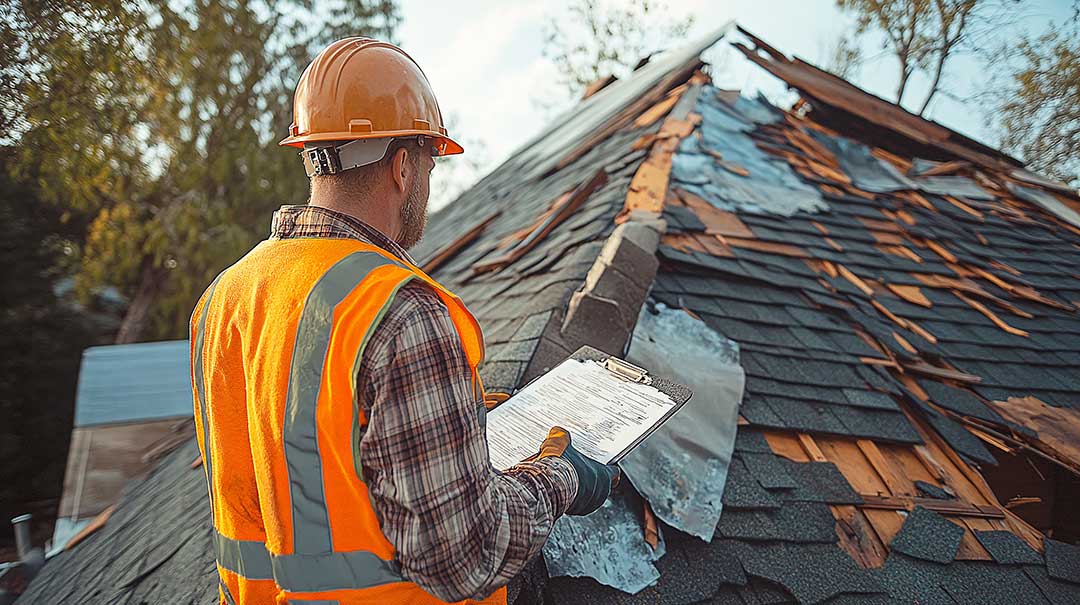
A key misconception is that a long-lasting roof covering makes the entire roof system permanent. Underlayment, flashing, fasteners, and roof framing remain exposed to moisture and movement. A slate or tile roof may therefore appear sound while hidden components are aging.
Walking on slate or tile can break the material and create a fall risk. Inspections should be performed from the ground, attic, or a properly controlled access point whenever possible.
How can flat or low-slope roof aging be recognized?
Flat and low-slope roofs often age differently because drainage is more important than on steep roofs. Water may remain on the surface longer, especially when drains, scuppers, or gutters are blocked.
Common signs include:
- Repeated ponding after rain
- Blisters or bubbles in the roof membrane
- Cracked seams or separated flashing
- Open laps or lifting edges
- Soft spots caused by trapped moisture
- Surface shrinkage or exposed reinforcement
- Sagging between structural supports
- Interior stains that return after precipitation
Ponding is not simply a cosmetic issue. Water adds weight, increases the chance of leaks, and can speed up deterioration of membranes and underlying materials. In cold weather, water that freezes and expands can widen existing cracks and seams.
Low-slope roofs should be observed after rainfall if safe access is available from the ground or an interior vantage point. Persistent puddles indicate a drainage or slope problem that should not be ignored.
Which roof areas age first?
The oldest-looking part of a roof is not always the most vulnerable. Valleys, eaves, roof edges, penetrations, and shaded sections often experience more stress than broad, open areas.
Pay particular attention to:
- Valleys where water and debris concentrate
- Chimney and vent flashing
- Skylight edges
- Areas below overhanging trees
- Roof sections beneath melting snow
- Eaves and soffit edges where ice dams may form
- Places where additions meet the original roof
Ice dams can force meltwater beneath roofing materials. They are more likely when attic insulation and ventilation are uneven, but even a well-maintained roof can experience problems during prolonged snow and freezing conditions.
What can be seen from inside the house?
Attic and upper-floor evidence can reveal aging before exterior damage becomes obvious. Look for dark roof sheathing, damp insulation, rusted fasteners, daylight through roof boards, or water trails around penetrations.
A water stain does not always appear directly below the leak. Water can travel along rafters, decking, insulation, or framing before reaching the ceiling. A stain that grows, feels damp, or returns after rain or snow deserves prompt investigation.
Musty odors, peeling paint near ceilings, and recurring dampness around exterior walls can also indicate roof-related moisture, although plumbing and ventilation problems may produce similar symptoms.
When is aging normal, and when is it a safety concern?
Normal aging usually develops gradually and affects surface appearance first. Safety concerns include active leaks, loose materials, sagging, exposed underlayment, structural softness, large areas of missing roofing, or damage near electrical equipment.
Avoid climbing onto a roof during rain, snow, ice, high wind, or when surfaces appear brittle. Moss-covered, steep, or damaged roofs can be especially hazardous. Binoculars, ground-level photographs, and attic observations often provide useful information without creating unnecessary risk.
A roof’s condition is best understood as a system rather than a single layer. Surface wear, drainage, ventilation, flashing, fasteners, and underlying structure all influence how aging progresses. Recognizing changes early allows householders to document the problem, protect interior areas from water, and make informed decisions before minor deterioration becomes a larger building issue.
